
The Battle for the Free Speech Soul of Western Civilization

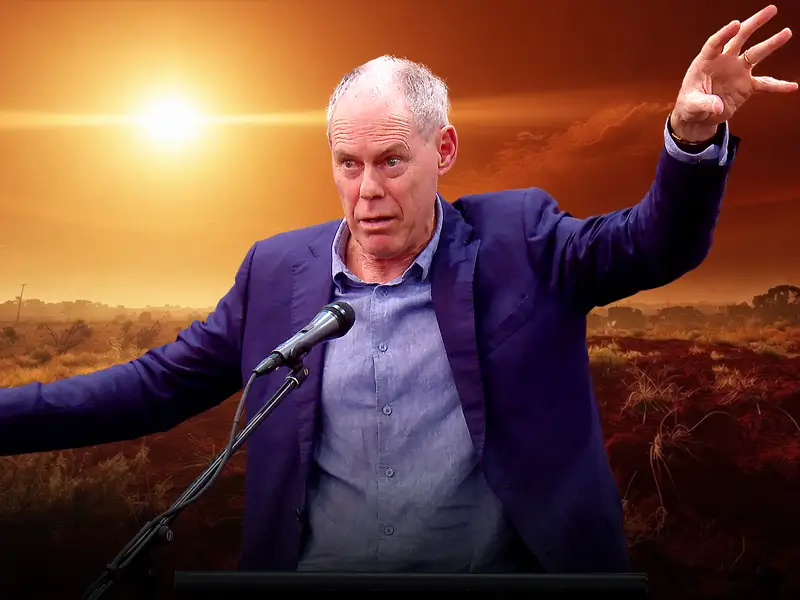
Does Australia already have Sharia laws in place? Gabriël Moens on the battle for Western civilisation: free speech vs. hate speech laws, socialism, gender politics, and multiculturalism. A hopeful call to keep the flame of liberty alive.

The Battle for the Free Speech Soul of Western Civilization

Does Australia already have Sharia laws in place? Gabriël Moens on the battle for Western civilisation: free speech vs. hate speech laws, socialism, gender politics, and multiculturalism. A hopeful call to keep the flame of liberty alive.


TRANSCRIPT: 

(This transcript is derived from an automated process.  The video recording is authoritative.) 

Professor Gabriël Moens:
You know, whenever there is an event organised by Mrs. Burbidge, she sends out a run sheet. And of course she did that on this occasion as well, an announcement of the two speakers. And on this occasion, she published a photo of mine which was taken 35 years ago. So in other words, the specimen that is in front of you is not really the person I'm today. [Heckler: Misinformation!] Yes. I would say it is misleading and deceptive conduct. Yeah. Because some of you may well have come in the expectation that you would be faced by a young dapper man. And instead what you have got is-.

What you have got instead is a much older version of the person on this sheet of paper who is probably on the threshold of senility, who knows? Yes. I don't think so. Well, I'm going to tell you tonight about this particular book, The Battle for the Soul of Western Civilization. In it, we argue that our civilization is under threat, not just in Australia, but indeed throughout the world. During the last couple of days, I wanted to make a list to provide examples of the extent to which our civilization is under threat, but I did not do that. In fact, on the way to the event tonight, I was thinking about the examples that I could possibly give you to demonstrate that our civilization is indeed under threat. And so I would like to give you a few examples. The examples I'm going to give you are not necessarily the best.

They just came to my mind while I was driving the car tonight. Let me start in the Netherlands. The Netherlands very recently, just a few weeks ago, adopted a law according to which from now on, taxation will be imposed on income that has not been earned. In other words, income that is deemed to be unrealized profits. It's an issue that was discussed in Australia last year as well. You know, in taxation, there is a very important principle that taxation will only be imposed on income that you have actually earned. But from now on, there will be taxation on unrealized profits, which may only exist on paper, but are not really real. Yes. And that is problematic because there is a philosophical shift away from taxation on money that you have earned to taxation on money that really doesn't exist. Basically, what is going to happen is this, some obscure bureaucrat in an office will decide how much your property is worth today compared to last year.

And if your property is worth more than last year, you will be taxed on the difference between the two amounts. And that could be a very substantial amount of money. Basically, it is a wealth tax, a wealth tax which will have to be paid year after year, every year from now on. So there is a very important philosophical shift, which I think is emblematic of the demise of Western civilization.

Let's go to Spain, for example. The government a few weeks ago in Spain decided it would naturalise approximately one million illegal, I repeat, illegal migrants. You may think there is nothing wrong with it, but there is because there is an expectation, of course, that these people will be grateful and will therefore vote for the government that naturalise them. And in Spain, there is an exceedingly left wing government that wants to maintain its power and entrench its power in society.

Basically, it is a distortion of the concept of democracy. That too is an example of the demise of Western civilization. Let's go to the United Kingdom. Well, if you dare to walk around in a square in London or anywhere else with a poster which says, "Talk to me about Jesus Christ. You will be accused of a hate crime. You will spend some time in jail. You will not be allowed to walk around with that sign." A few weeks ago, a Christian organisation wanted to have a demonstration or operate in London. Well, they did not receive permission to do so. However, a day later, a Muslim organisation applied for a permit and a permit was of course immediately granted. In the UK, as far as I remember, there are about 80 Sharia courts that have been established somehow legally and are operational in the UK and that number can only increase, obviously.

In the UK, there is a two-tiered system of justice. Some criminals get off very lightly, whereas others, mainly Christians, will be relentlessly punished for even the minus of infractions that you could possibly think of. So that is very problematic indeed. In Belgium, where I'm from, in Brussels, one child out of 10 has parents that have been born in Belgium, only one out of 10. So that is problematic as well. You see? And you might think all the stories that I tell you happen overseas, but you know there are serious problems in Australia too.

Here in the state of Queensland, we have a law from 2018, the law on abortion. It is the Termination of Pregnancy Act of 2018. According to the legislation, abortion is available up to and including the 22nd week for any reason whatsoever. I'm not going to complain about that particular law, but if there is a botched abortion and a baby is born after a botched abortion, the baby is left to die on a metal plate without receiving medical assistance or care or compassion.

Now, if that is not barbaric, what is? Horrible. Horrible. And we can't even discuss it in parliament because the premier, Mr. Crisafulli, has decreed that issues having to do with abortion are of limits and will never be discussed during the term of this parliament. It is barbaric, and of course, that is to be regretted. Now, these are merely a few examples of the demise of Western civilization. As I said, they are not necessarily the best examples. I came up with them when I was driving to the event tonight, but they are already sufficiently detailed for you to come to the conclusion that our civilization is clearly under threat. Now, coming to this book, this book that we have written consists of five parts and there are 20 chapters, 20 chapters. Now, the most important idea which we discuss, and it is an idea that you find in every chapter of the book, is that free speech is vital to the survival and maintenance of Western civilization.

And this is because free speech enables a democratic form of government to exist in the first place. And it also creates a culture in which the arts can flourish. And it is also the nourishment of commerce, trade, and manufacturing. And yet, during the last two decades or so, free speech has been under threat, not just here in Australia, but indeed throughout the world. Even a few weeks ago, I heard the premier of New South Wales, Mr. Mintz say on television that the people have a choice. They can either have free speech or multiculturalism, right? Free speech or multiculturalism. And he was actually suggesting that people should give up free speech if they want to live in a multicultural society. For him, social cohesion is far more important than free speech.

That is problematic because this is an issue that we need to discuss in greater detail in society because it requires us to think about the kind of immigrant we should allow to come to Australia. And it also requires us to think about the concept of multiculturalism. The debate in Australia on multiculturalism is very amateurish, I would say. Shallow. There are two types of multiculturalism. There is soft multiculturalism and there is a hard multiculturalism. I have written a few articles about this issue in which I make that distinction. Now, what is soft? Multiculturalism? Well, it means that people who come to Australia are obviously entitled to organise their own festivals, to speak their own language at home or elsewhere, to have their own art festivals, maintain their own religions, be themselves. And that is a type of multiculturalism that is, in my view, completely compatible with free speech because it does enrich our society.

But hard multiculturalism is not. What is hard multiculturalism? Hard multiculturalism means that burdens and benefits are going to be distributed on the grounds of a person's ethnicity. When I first came to Australia, I became the National Executive Director of the Ethnic Communities Council, and I learned a great deal. In the early days, I learned that ethnic community councils, the lobby groups, really are only ever going to be interested in a hard affirmative action. They want to soak up the money that the government is willing to give them. They want burdens and benefits to be distributed on account of ethnicity. It is about getting grants merely because they happen to be ethnic or born in China or in Belgium or Germany.

Now, this is the type of hard multiculturalism that I'm very much opposed to because I always believe, and I always believed in the past that people should be treated equally regardless of their race, ethnicity, gender, religion, and so on.

But that is not the case, not in Australia. And of course, it raises the question as to what kind of immigrant we should welcome to Australia. My view is we should only ever allow people to come to Australia, people whose values are compatible with the values of Australians and the values of Australia. But what has happened recently or during the last couple of years? Well, during the last couple of years, many migrants came to Australia from the world travels, not travel sports, trouble sports, kind of a distinct difference, is it not? They come from the world trouble sports, mainly from theocratic societies, deocratic societies where there is no separation between church and state. In Australia, even when I came to this country for the first time, I realised very quickly and I expected there would be separation between church and state, but our migrants, many of them recently come from theocratic societies where there is no separation between church and state.

And if you have never been exposed to the idea that there should be separation between church and state, you will not really fit in quite easily in Australia. The day may come that a choice will have to be made. Are you going to be patriotic? Are you going to fight for Australia or are you going to stick to your deocratic views which have been imposed upon you when you were a child or even an adult overseas? In my experience, many migrants will actually go for the theocratic idea and will not regard Australia as a country that is worthy of protection. So that is a problem. So I have always argued that migrants who come to Australia should be carefully vetted. They must be able to make a contribution to society. Yes, they should be allowed to profit from Australia, but they must also make a contribution to this country in wage which is compatible with their knowledge, education, ambition, drive, aspiration, and so on.

During the last decade, state parliaments and the federal parliament have adopted many speech restricting laws. I call them 'hate speech' laws. And I'm not going to give you examples of state laws because otherwise we will still be here tomorrow morning and I'm not going to imperial sanity, as I always say.

However, I might just give you three examples, three examples of federal laws that have been adopted in this space, three federal hate speech laws. Most of you would know Section 18C and Section 18D of the Racial Discrimination Act. According to that legislation, according to Article Section 18C, you cannot intentionally make a statement which humiliates a member of a racial minority. In fact, the legislation says this, and I would like to read it to you. It says, "It is illegal for a person to do an act otherwise done in private if the act is reasonably likely in all the circumstances to offend, insult, humiliate or intimidate another person or a group of people, and the act is done because of the race, colour, national or ethnic origin of the other person or of some or all of the people in the group." Now, in 2025, that is last year, the Federal Parliament adopted the Criminal Code Amendment Hate Crimes Act of 2025.

That legislation actually introduced into the jurisprudence of Australia the recklessness test. If you make a statement recklessly, but not necessarily intentionally, right? And your reckless statement is perceived by a reasonable person of a protected group, right? A protected group, which is distinguished by race, religion, sex, sexual orientation, gender identity, intersect status, disability, nationality, national or ethnic origin or political opinion, then you might well be sent to jail for up to 15 years. You lock me up every day. Yes. Yes.

So interesting to note that the idea of intention which underlies Section 18C of the Racial Discrimination Act no longer exists for the purposes of the 2025 legislation. And it is also interesting to note that the legislation says that if a reckless statement is perceived by a member of a protected group, by a reasonable person of the protected group as intimidatory, then you have committed a crime.

So the legislation does not say a reasonable person of the general public, it says a reasonable person of the protected group. And we all know, and it is common sense, that a reasonable person of the protected group is more likely to find a statement reckless than a reasonable person of the general community, as we all know.

Now, a final example is the legislation that was adopted by the end of January 2026. That is the combating antisemitism, hate and extremism act of 2026, which is supposedly a response to the Bondi Beach massacre, where quite a number of Jewish people were slaughtered. Now, that legislation adopted only a few weeks ago is possibly among the worst legislation that I have ever seen. It is badly written. Concepts are not defined. The concepts are vague and overbroad, and indeed, the legislation will also criminalise behaviour which happened in the past, so it has retrospective effect.

The legislation basically says that any conduct, and of course statements made by people are conduct, any conduct that is intimidatory or that is perceived to be intimidatory by a member of a target group, a protected target group is illegal and it constitutes a crime. And again, you could go to jail for a long period of time.

Now, I would like you to know that this hate speech legislation, especially the law adopted in 2026, could easily be used by members of radical Islamist organisations to actually initiate legal action against other people who make negative comments about them. In other words, the legislation is likely to achieve a purpose which may not have been contemplated by the lawmaker. When you come to think of it, the legislation is a new blasphemy law because you can't say anything that is perceived by some member of a protected group as a negative comment of their religion. I thought quite wrongly that we did not have blasphemy laws in Australia and indeed the last blasphemy law was repealed in 1995. And if I'm not mistaken, the last successful prosecution for blasphemy was way back in 1871.

But that being said, in my view, we have a new blasphemy law on our books. Now, I would like you to know that I am fundamentally opposed to hate speech legislation. I'm fundamentally opposed to speech restricting laws, and I would like to tell you why. Mind you, surely that legislation that I have been talking about will achieve its purpose. It will muzzle the free speech of people, because people will not likely make a statement that may lead to or result in them being incarcerated for 15 years. So obviously, people will think twice before they make a statement. So the legislation to some extent, if not completely, will be successful in that space. However, what the legislation cannot do is this, legislation of this kind cannot outlaw the beliefs, the philosophy, the ideology which underlies the supposed, supposed hate speech. The beliefs that people will have can't be out loud because the beliefs will still be there, even though people will no longer be able to make their statements openly and publicly.

The beliefs and the philosophy and the ideology underlying hate speech will simply go underground where it will fester and in fact, and it will come to the surface, perhaps later in the future in a different era when it is suitable for this to happen. So basically what I'm telling you is that legislation of this kind merely deals with symptoms. It does not deal and it cannot possibly deal with causes of the hate speech which arguably may exist in our society. So in that regard, the legislation is nothing health but a spectacular failure.

In my view, it is in the nature of men and women to speak freely. And if you speak unwisely or stupidly or in a derogatory or intimidatory manner, then your speech will be corrected, ostracised, analysed by the free speech of other people. Basically, what we need to have in this country is a free market of free speech, where the free speech of a person is checked by the free speech of others, and as a consequence, truth will come out eventually. That is what we need. There is another point that I would like to make, and it is about one of the consequences of the hate speech legislation adopted by successive parliaments, labour, and liberal. As a consequence of this legislation, we are not going to speak up anymore. There will be no debate really in society. There will be no robust debate because we would be afraid of going to jail.

We have created a very weak society where people are no longer able or willing to speak up. We are no longer a resilient society, a resilient society as a society where free speech is promoted, where there is robust debate about all sorts of issues, political and social. That doesn't exist anymore in Australia. We are essentially a very weak society, no longer that resilient society that we need for innovation, for advancement, for achievement, and for great things. Is that a good thing? No, it is certainly not a good thing. And that is why I say that we need to embrace free speech. Absolutely. We need to embrace free speech. One famous associate justice of the American Supreme Court used to tell us what we need is not enforced silence. What we need is actually more speech. Only if there is more speech will we be able to solve the problems of our time.

So what I would like you to understand, and this is the theme that we develop in our book, is that free speech is therefore so important for the survival and maintenance of a free society. And I hope that Australia will maintain its reputation, perhaps not very well deserved as a free society.

So this free speech issue is dealt with in every chapter of the book. Now, if I had lots of time, I would be able to tell you a lot of things about other chapters of the book. There is, for example, a chapter. In fact, there are a few chapters about socialism. And we argue in the book that a true socialist is a person who will always and inevitably and invariably blame other people for their plight. It is inflation, geopolitical situation, the war in Iran. It is the opposition. It will always be a blame game. A socialist will always blame other people. Yes.

And of course, we also argue, we argue many things, but we also argue that a true socialist is a person who loves the state. The state is an entity that is supposed to look after people. The state is adored as if the state is a nanny state. And we are children in a nanny that have to be looked after. Basically, it enslaves people. And do we want to be slaves? Yeah. Looked after by the government, dancing to the tune of anything the government might want to do and might want to say. I don't think so. But anyway, I commend the arguments in our book on that particular issue. There is also a chapter, or I should rather say a part consisting of several chapters on gender, the politics of gender. In it, we discuss laws which enable people to change their biological sex on their birth certificate.

Yes. Well, I can go to the registry and claim that from now on I am a girl. And don't you dare to say that I'm not a girl. In fact, I don't even have to change my name, Gabriel.

Yes. Yes. And we also deal with dysphoria, of course. And of course, we deal with the transitioning of young people to a different sex, which is absolutely horrible because as Professor Zimmerman explained, many of the young people are mutilated, their breasts are taken. Sometimes the penis of the man is cut off. Yes. Basically, many young people who go through that procedure will regret it later in life, but of course the damage will be done and it is irreversible and they will become patience for life. This cannot be a good thing. And this often happens without the consent of the parents. And sometimes the parents don't even know about this when that is happening in society.

Yes. It is evil one could say that. So the main point that we discuss in this book is free speech, but there is obviously much more than that. You might think that we do nothing else but complain about the things that happen in the world, but that is not quite true because this is a book about hope. It is hope for a better future, hope for a better future for our children, for the next generation. We express the hope that there is still hope to reverse the situation to undo the damage which has been done, but you will only ever be able to do that if you meet one requirement. That requirement is that you must actually believe in freedom and in free speech. If you don't believe in it, nothing is going to change and nothing is going to happen. The free speech that I have been talking about tonight must exist in your heart.

If it is not embedded in your heart, nothing will help you. Nothing is going to change. And I would like to read a statement that was made by a man in 2012. His name is Stratford Caldercott, who wrote a book, Beauty in the World: Rethinking the Foundations of Education. He said, making this point, namely that freedom must be in the hearts of people. He said, "It can only take place in the heart. Freedom can only take place in the heart. That is in the centre of the human person. A voice from the lungs is not enough to carry another along with the meaning of the words. The voice has to carry with it the warmth and living fire of the heart around which the lungs are wrapped." And that also reminds me of a famous statement by Judge Lernard Hand, an American judge who in 1944 in Central Park in New York gave a speech known as the Spirit of Liberty Speech.

And basically, he also said that freedom must reside in the hearts of people. If it does not reside there, laws and constitutions and regulations are not going to help you at all.

So basically, the message that we have got for you is that this book is an exhortation to keep the flame of freedom burning. That is what we really would like to achieve. And of course, we are writing other books where we also develop the same theme. Professor Zimmerman and I have a book coming out in the middle of the year on civil disobedience and free speech, which will give us another opportunity to make the point which I have tried to communicate effectively during my little talk this evening. So I hope you enjoy reading this book. It is of course available for a very small donation, and I hope that you will be able to read it and enjoy it. And I hope that you will give us comments that you will tell us honestly what you think about the arguments that we make in our book.

But one thing is certain, if we want to protect freedom, we must be eternally vigilant. That is your task and that is my task. Thank you.


The Battle for the Free Speech Soul of Western Civilization
Watch the video


TRANSCRIPT: 

(This transcript is derived from an automated process.  The video recording is authoritative.) 

Professor Gabriël Moens:
You know, whenever there is an event organised by Mrs. Burbidge, she sends out a run sheet. And of course she did that on this occasion as well, an announcement of the two speakers. And on this occasion, she published a photo of mine which was taken 35 years ago. So in other words, the specimen that is in front of you is not really the person I'm today. [Heckler: Misinformation!] Yes. I would say it is misleading and deceptive conduct. Yeah. Because some of you may well have come in the expectation that you would be faced by a young dapper man. And instead what you have got is-.

What you have got instead is a much older version of the person on this sheet of paper who is probably on the threshold of senility, who knows? Yes. I don't think so. Well, I'm going to tell you tonight about this particular book, The Battle for the Soul of Western Civilization. In it, we argue that our civilization is under threat, not just in Australia, but indeed throughout the world. During the last couple of days, I wanted to make a list to provide examples of the extent to which our civilization is under threat, but I did not do that. In fact, on the way to the event tonight, I was thinking about the examples that I could possibly give you to demonstrate that our civilization is indeed under threat. And so I would like to give you a few examples. The examples I'm going to give you are not necessarily the best.

They just came to my mind while I was driving the car tonight. Let me start in the Netherlands. The Netherlands very recently, just a few weeks ago, adopted a law according to which from now on, taxation will be imposed on income that has not been earned. In other words, income that is deemed to be unrealized profits. It's an issue that was discussed in Australia last year as well. You know, in taxation, there is a very important principle that taxation will only be imposed on income that you have actually earned. But from now on, there will be taxation on unrealized profits, which may only exist on paper, but are not really real. Yes. And that is problematic because there is a philosophical shift away from taxation on money that you have earned to taxation on money that really doesn't exist. Basically, what is going to happen is this, some obscure bureaucrat in an office will decide how much your property is worth today compared to last year.

And if your property is worth more than last year, you will be taxed on the difference between the two amounts. And that could be a very substantial amount of money. Basically, it is a wealth tax, a wealth tax which will have to be paid year after year, every year from now on. So there is a very important philosophical shift, which I think is emblematic of the demise of Western civilization.

Let's go to Spain, for example. The government a few weeks ago in Spain decided it would naturalise approximately one million illegal, I repeat, illegal migrants. You may think there is nothing wrong with it, but there is because there is an expectation, of course, that these people will be grateful and will therefore vote for the government that naturalise them. And in Spain, there is an exceedingly left wing government that wants to maintain its power and entrench its power in society.

Basically, it is a distortion of the concept of democracy. That too is an example of the demise of Western civilization. Let's go to the United Kingdom. Well, if you dare to walk around in a square in London or anywhere else with a poster which says, "Talk to me about Jesus Christ. You will be accused of a hate crime. You will spend some time in jail. You will not be allowed to walk around with that sign." A few weeks ago, a Christian organisation wanted to have a demonstration or operate in London. Well, they did not receive permission to do so. However, a day later, a Muslim organisation applied for a permit and a permit was of course immediately granted. In the UK, as far as I remember, there are about 80 Sharia courts that have been established somehow legally and are operational in the UK and that number can only increase, obviously.

In the UK, there is a two-tiered system of justice. Some criminals get off very lightly, whereas others, mainly Christians, will be relentlessly punished for even the minus of infractions that you could possibly think of. So that is very problematic indeed. In Belgium, where I'm from, in Brussels, one child out of 10 has parents that have been born in Belgium, only one out of 10. So that is problematic as well. You see? And you might think all the stories that I tell you happen overseas, but you know there are serious problems in Australia too.

Here in the state of Queensland, we have a law from 2018, the law on abortion. It is the Termination of Pregnancy Act of 2018. According to the legislation, abortion is available up to and including the 22nd week for any reason whatsoever. I'm not going to complain about that particular law, but if there is a botched abortion and a baby is born after a botched abortion, the baby is left to die on a metal plate without receiving medical assistance or care or compassion.

Now, if that is not barbaric, what is? Horrible. Horrible. And we can't even discuss it in parliament because the premier, Mr. Crisafulli, has decreed that issues having to do with abortion are of limits and will never be discussed during the term of this parliament. It is barbaric, and of course, that is to be regretted. Now, these are merely a few examples of the demise of Western civilization. As I said, they are not necessarily the best examples. I came up with them when I was driving to the event tonight, but they are already sufficiently detailed for you to come to the conclusion that our civilization is clearly under threat. Now, coming to this book, this book that we have written consists of five parts and there are 20 chapters, 20 chapters. Now, the most important idea which we discuss, and it is an idea that you find in every chapter of the book, is that free speech is vital to the survival and maintenance of Western civilization.

And this is because free speech enables a democratic form of government to exist in the first place. And it also creates a culture in which the arts can flourish. And it is also the nourishment of commerce, trade, and manufacturing. And yet, during the last two decades or so, free speech has been under threat, not just here in Australia, but indeed throughout the world. Even a few weeks ago, I heard the premier of New South Wales, Mr. Mintz say on television that the people have a choice. They can either have free speech or multiculturalism, right? Free speech or multiculturalism. And he was actually suggesting that people should give up free speech if they want to live in a multicultural society. For him, social cohesion is far more important than free speech.

That is problematic because this is an issue that we need to discuss in greater detail in society because it requires us to think about the kind of immigrant we should allow to come to Australia. And it also requires us to think about the concept of multiculturalism. The debate in Australia on multiculturalism is very amateurish, I would say. Shallow. There are two types of multiculturalism. There is soft multiculturalism and there is a hard multiculturalism. I have written a few articles about this issue in which I make that distinction. Now, what is soft? Multiculturalism? Well, it means that people who come to Australia are obviously entitled to organise their own festivals, to speak their own language at home or elsewhere, to have their own art festivals, maintain their own religions, be themselves. And that is a type of multiculturalism that is, in my view, completely compatible with free speech because it does enrich our society.

But hard multiculturalism is not. What is hard multiculturalism? Hard multiculturalism means that burdens and benefits are going to be distributed on the grounds of a person's ethnicity. When I first came to Australia, I became the National Executive Director of the Ethnic Communities Council, and I learned a great deal. In the early days, I learned that ethnic community councils, the lobby groups, really are only ever going to be interested in a hard affirmative action. They want to soak up the money that the government is willing to give them. They want burdens and benefits to be distributed on account of ethnicity. It is about getting grants merely because they happen to be ethnic or born in China or in Belgium or Germany.

Now, this is the type of hard multiculturalism that I'm very much opposed to because I always believe, and I always believed in the past that people should be treated equally regardless of their race, ethnicity, gender, religion, and so on.

But that is not the case, not in Australia. And of course, it raises the question as to what kind of immigrant we should welcome to Australia. My view is we should only ever allow people to come to Australia, people whose values are compatible with the values of Australians and the values of Australia. But what has happened recently or during the last couple of years? Well, during the last couple of years, many migrants came to Australia from the world travels, not travel sports, trouble sports, kind of a distinct difference, is it not? They come from the world trouble sports, mainly from theocratic societies, deocratic societies where there is no separation between church and state. In Australia, even when I came to this country for the first time, I realised very quickly and I expected there would be separation between church and state, but our migrants, many of them recently come from theocratic societies where there is no separation between church and state.

And if you have never been exposed to the idea that there should be separation between church and state, you will not really fit in quite easily in Australia. The day may come that a choice will have to be made. Are you going to be patriotic? Are you going to fight for Australia or are you going to stick to your deocratic views which have been imposed upon you when you were a child or even an adult overseas? In my experience, many migrants will actually go for the theocratic idea and will not regard Australia as a country that is worthy of protection. So that is a problem. So I have always argued that migrants who come to Australia should be carefully vetted. They must be able to make a contribution to society. Yes, they should be allowed to profit from Australia, but they must also make a contribution to this country in wage which is compatible with their knowledge, education, ambition, drive, aspiration, and so on.

During the last decade, state parliaments and the federal parliament have adopted many speech restricting laws. I call them 'hate speech' laws. And I'm not going to give you examples of state laws because otherwise we will still be here tomorrow morning and I'm not going to imperial sanity, as I always say.

However, I might just give you three examples, three examples of federal laws that have been adopted in this space, three federal hate speech laws. Most of you would know Section 18C and Section 18D of the Racial Discrimination Act. According to that legislation, according to Article Section 18C, you cannot intentionally make a statement which humiliates a member of a racial minority. In fact, the legislation says this, and I would like to read it to you. It says, "It is illegal for a person to do an act otherwise done in private if the act is reasonably likely in all the circumstances to offend, insult, humiliate or intimidate another person or a group of people, and the act is done because of the race, colour, national or ethnic origin of the other person or of some or all of the people in the group." Now, in 2025, that is last year, the Federal Parliament adopted the Criminal Code Amendment Hate Crimes Act of 2025.

That legislation actually introduced into the jurisprudence of Australia the recklessness test. If you make a statement recklessly, but not necessarily intentionally, right? And your reckless statement is perceived by a reasonable person of a protected group, right? A protected group, which is distinguished by race, religion, sex, sexual orientation, gender identity, intersect status, disability, nationality, national or ethnic origin or political opinion, then you might well be sent to jail for up to 15 years. You lock me up every day. Yes. Yes.

So interesting to note that the idea of intention which underlies Section 18C of the Racial Discrimination Act no longer exists for the purposes of the 2025 legislation. And it is also interesting to note that the legislation says that if a reckless statement is perceived by a member of a protected group, by a reasonable person of the protected group as intimidatory, then you have committed a crime.

So the legislation does not say a reasonable person of the general public, it says a reasonable person of the protected group. And we all know, and it is common sense, that a reasonable person of the protected group is more likely to find a statement reckless than a reasonable person of the general community, as we all know.

Now, a final example is the legislation that was adopted by the end of January 2026. That is the combating antisemitism, hate and extremism act of 2026, which is supposedly a response to the Bondi Beach massacre, where quite a number of Jewish people were slaughtered. Now, that legislation adopted only a few weeks ago is possibly among the worst legislation that I have ever seen. It is badly written. Concepts are not defined. The concepts are vague and overbroad, and indeed, the legislation will also criminalise behaviour which happened in the past, so it has retrospective effect.

The legislation basically says that any conduct, and of course statements made by people are conduct, any conduct that is intimidatory or that is perceived to be intimidatory by a member of a target group, a protected target group is illegal and it constitutes a crime. And again, you could go to jail for a long period of time.

Now, I would like you to know that this hate speech legislation, especially the law adopted in 2026, could easily be used by members of radical Islamist organisations to actually initiate legal action against other people who make negative comments about them. In other words, the legislation is likely to achieve a purpose which may not have been contemplated by the lawmaker. When you come to think of it, the legislation is a new blasphemy law because you can't say anything that is perceived by some member of a protected group as a negative comment of their religion. I thought quite wrongly that we did not have blasphemy laws in Australia and indeed the last blasphemy law was repealed in 1995. And if I'm not mistaken, the last successful prosecution for blasphemy was way back in 1871.

But that being said, in my view, we have a new blasphemy law on our books. Now, I would like you to know that I am fundamentally opposed to hate speech legislation. I'm fundamentally opposed to speech restricting laws, and I would like to tell you why. Mind you, surely that legislation that I have been talking about will achieve its purpose. It will muzzle the free speech of people, because people will not likely make a statement that may lead to or result in them being incarcerated for 15 years. So obviously, people will think twice before they make a statement. So the legislation to some extent, if not completely, will be successful in that space. However, what the legislation cannot do is this, legislation of this kind cannot outlaw the beliefs, the philosophy, the ideology which underlies the supposed, supposed hate speech. The beliefs that people will have can't be out loud because the beliefs will still be there, even though people will no longer be able to make their statements openly and publicly.

The beliefs and the philosophy and the ideology underlying hate speech will simply go underground where it will fester and in fact, and it will come to the surface, perhaps later in the future in a different era when it is suitable for this to happen. So basically what I'm telling you is that legislation of this kind merely deals with symptoms. It does not deal and it cannot possibly deal with causes of the hate speech which arguably may exist in our society. So in that regard, the legislation is nothing health but a spectacular failure.

In my view, it is in the nature of men and women to speak freely. And if you speak unwisely or stupidly or in a derogatory or intimidatory manner, then your speech will be corrected, ostracised, analysed by the free speech of other people. Basically, what we need to have in this country is a free market of free speech, where the free speech of a person is checked by the free speech of others, and as a consequence, truth will come out eventually. That is what we need. There is another point that I would like to make, and it is about one of the consequences of the hate speech legislation adopted by successive parliaments, labour, and liberal. As a consequence of this legislation, we are not going to speak up anymore. There will be no debate really in society. There will be no robust debate because we would be afraid of going to jail.

We have created a very weak society where people are no longer able or willing to speak up. We are no longer a resilient society, a resilient society as a society where free speech is promoted, where there is robust debate about all sorts of issues, political and social. That doesn't exist anymore in Australia. We are essentially a very weak society, no longer that resilient society that we need for innovation, for advancement, for achievement, and for great things. Is that a good thing? No, it is certainly not a good thing. And that is why I say that we need to embrace free speech. Absolutely. We need to embrace free speech. One famous associate justice of the American Supreme Court used to tell us what we need is not enforced silence. What we need is actually more speech. Only if there is more speech will we be able to solve the problems of our time.

So what I would like you to understand, and this is the theme that we develop in our book, is that free speech is therefore so important for the survival and maintenance of a free society. And I hope that Australia will maintain its reputation, perhaps not very well deserved as a free society.

So this free speech issue is dealt with in every chapter of the book. Now, if I had lots of time, I would be able to tell you a lot of things about other chapters of the book. There is, for example, a chapter. In fact, there are a few chapters about socialism. And we argue in the book that a true socialist is a person who will always and inevitably and invariably blame other people for their plight. It is inflation, geopolitical situation, the war in Iran. It is the opposition. It will always be a blame game. A socialist will always blame other people. Yes.

And of course, we also argue, we argue many things, but we also argue that a true socialist is a person who loves the state. The state is an entity that is supposed to look after people. The state is adored as if the state is a nanny state. And we are children in a nanny that have to be looked after. Basically, it enslaves people. And do we want to be slaves? Yeah. Looked after by the government, dancing to the tune of anything the government might want to do and might want to say. I don't think so. But anyway, I commend the arguments in our book on that particular issue. There is also a chapter, or I should rather say a part consisting of several chapters on gender, the politics of gender. In it, we discuss laws which enable people to change their biological sex on their birth certificate.

Yes. Well, I can go to the registry and claim that from now on I am a girl. And don't you dare to say that I'm not a girl. In fact, I don't even have to change my name, Gabriel.

Yes. Yes. And we also deal with dysphoria, of course. And of course, we deal with the transitioning of young people to a different sex, which is absolutely horrible because as Professor Zimmerman explained, many of the young people are mutilated, their breasts are taken. Sometimes the penis of the man is cut off. Yes. Basically, many young people who go through that procedure will regret it later in life, but of course the damage will be done and it is irreversible and they will become patience for life. This cannot be a good thing. And this often happens without the consent of the parents. And sometimes the parents don't even know about this when that is happening in society.

Yes. It is evil one could say that. So the main point that we discuss in this book is free speech, but there is obviously much more than that. You might think that we do nothing else but complain about the things that happen in the world, but that is not quite true because this is a book about hope. It is hope for a better future, hope for a better future for our children, for the next generation. We express the hope that there is still hope to reverse the situation to undo the damage which has been done, but you will only ever be able to do that if you meet one requirement. That requirement is that you must actually believe in freedom and in free speech. If you don't believe in it, nothing is going to change and nothing is going to happen. The free speech that I have been talking about tonight must exist in your heart.

If it is not embedded in your heart, nothing will help you. Nothing is going to change. And I would like to read a statement that was made by a man in 2012. His name is Stratford Caldercott, who wrote a book, Beauty in the World: Rethinking the Foundations of Education. He said, making this point, namely that freedom must be in the hearts of people. He said, "It can only take place in the heart. Freedom can only take place in the heart. That is in the centre of the human person. A voice from the lungs is not enough to carry another along with the meaning of the words. The voice has to carry with it the warmth and living fire of the heart around which the lungs are wrapped." And that also reminds me of a famous statement by Judge Lernard Hand, an American judge who in 1944 in Central Park in New York gave a speech known as the Spirit of Liberty Speech.

And basically, he also said that freedom must reside in the hearts of people. If it does not reside there, laws and constitutions and regulations are not going to help you at all.

So basically, the message that we have got for you is that this book is an exhortation to keep the flame of freedom burning. That is what we really would like to achieve. And of course, we are writing other books where we also develop the same theme. Professor Zimmerman and I have a book coming out in the middle of the year on civil disobedience and free speech, which will give us another opportunity to make the point which I have tried to communicate effectively during my little talk this evening. So I hope you enjoy reading this book. It is of course available for a very small donation, and I hope that you will be able to read it and enjoy it. And I hope that you will give us comments that you will tell us honestly what you think about the arguments that we make in our book.

But one thing is certain, if we want to protect freedom, we must be eternally vigilant. That is your task and that is my task. Thank you.