
How to reform the current state of the media and how all of us can play a part.
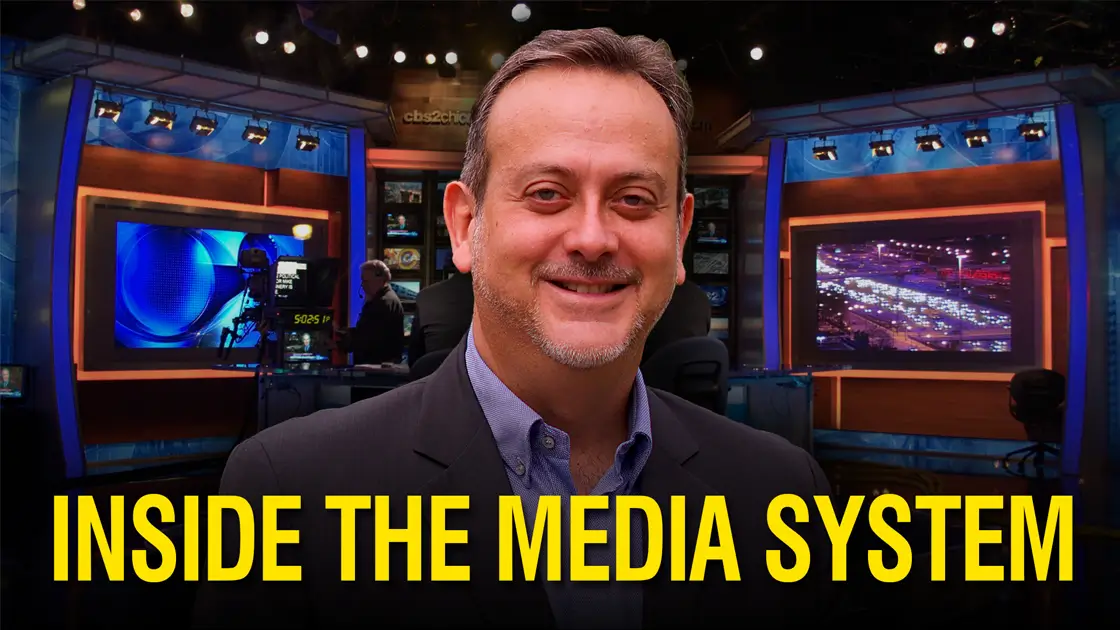
From 1986 Damian Coory spent 13 years as a senior radio and television journalist in Australia, during which time he was a Senior Reporter for Network Ten in their Brisbane and Sydney newsrooms; News Director for Triple M Brisbane; and a senior presenter, and journalist at Melbourne’s 3AW, Brisbane’s 4BC and ABC Radio Queensland. Damian hosted the Drive time program on Brisbane’s News-Talk radio station 4BC in 1995.
Damian has more than two decades’ experience in corporate public relations working across Australia and the Asia Pacific region. He is a specialist in executive coaching, and crisis communications. He worked as Head of Crisis and Issues management for the global PR firm Hill & Knowlton and later served as Managing Director of the Hong Kong and Taiwan businesses of Edelman Public Relations, one of the world’s largest PR consultancies.
Damian and his family returned to Australia from Asia in 2020 and -- noticing a lack of diversity of opinion in the Australian media landscape -- he launched The Other Side Australia podcast, which ran until December 2021 on the Discernable platform. Damian then decided to run for politics as a house of representatives candidate for the Liberal DEMOCRATS in the Brisbane seat of Ryan. He continues to counsel multi-nationals and writes regularly about the media and PR for publications such as "The Spectator".
TRANSCRIPT:
Welcome and hello to ... I should acknowledge the presence of our former Lord Mayor and Premier Campbell Newman and his lovely wife Lisa. It's a very scary photo. They may not got to stay though. Look like you're about to turn around and thump me in the head.
The media and conservatives and the right wing side of politics. It's a very, very difficult environment in which we're operating in Australia. I think we're all kind of aware of that in terms of who dominates the media culture in this country. And we're not the only ones. Our friends in the United States have been dealing with this for some time and they have a few lessons to teach us and a few things that I think we can learn from them because I think they're a little bit further down the track than we are in terms of being able to challenge the media and to start to change and influence the culture in a positive direction.
I heard a joke recently that CNN reported that there were only 200 protestors at a Donald Trump conference recently, Donald Trump protest recently, of which 1700 were arrested for incitement.
I'm a bit of a fan of this guy. His name's Andrew Breitbart. Andrew Breitbart started Breitbart News. He's been demonised himself as a far right extremist media person. He actually started on the political left and his story's quite fascinating, which he outlines in a really easy to read and entertaining book called Righteous Indignation. Excuse me While I Save the World. And that sort of sums Brightbart up.
He's the man who influenced Steve Bennon the most and of course in turn influenced the Donald Trump approach to managing and handling the media, which is a little bit different to what people in my public relations field do in Australia. We tend to tiptoe around the media. And that is a bit of a problem.
But Andrew Breitbart's famous for this quote, "Politics is downstream of culture." And what that means is that when we're standing there in the, as I learned in the federal election handing out how to vote cards at the very last moment, it's pretty hard to change people's minds if we've already lost the culture war.
So we've got to really start with the culture war and remember that the culture war is the thing that we're constantly fighting and that we're constantly trying to affect. So what is culture and what kind of cultural change has Australia gone through since the 1960s?
Well, firstly, we've seen an infiltration of the left into education, from primary through to tertiary and secondary education. And that's gotten progressively stronger and stronger and stronger so that now it's generationally entrenched. When Jordan Peterson was interviewed by Neil Mitchell on 3AW a couple of years ago, Mitchell said, "Well, what are you worried about these university students for? They're just typical university students. They're going to grow out of it." And Jordan Peterson said, "I'm not worried about the university students. I'm worried about the professors." Because we've reached that point where we've got that generational intrinsic infiltration of neo-Marxist identity, politics-oriented sort of thinking.
And the same thing is occurring with our media, obviously, and our social media as well, which is what I'm going to focus mainly on tonight. But the other areas that we have to look at are the family unit, the kitchen table, the left are attacking the family unit in every way they can. We see social media and digital media breaking down the dinnertime conversation. So a lot of families not taking the time to sit together around a table and engage and interact with each other, everybody on their phones.
We don't have that collective unity of sitting in front of the TV as a family unit either anymore and watching one source of information. We split it off into our own rooms with our own devices. And finally, religion is the other very important part of culture. We've seen the left diminish religion in general. We've seen obviously the falling attendance, numbers at churches at synagogues, synagogues.
We know how mosques have been politicised by bad actors, the temple, and spirituality has risen or pop spirituality, new age spirituality, people turning away from the institutions of the church and saying, "Well, I'm not religious, but I have my own spiritual ideas." All of that sort of thing to break down those particular institutions that are so important and framed culture in Australia prides of the 1960s.
So we've got to look at those levels.
We're going to concentrate mainly on the media tonight. So I want to just ... I tried to get that to appear, but it's all come up at once, so I apologise for there being too many words on that slide, but basically we're in a perfect storm of change in the media. And the first aspect of that is the fragmentation of mind share, which means that we no longer sit around that central six o'clock news and or watch it as a family.
We don't read the same newspaper every day. We've all got different channels of information and that's been broken up and fragmented. That's actually positive because it enables different voices to cut through. So that's a good thing, but unfortunately it makes things harder for everybody because we've got to find a way to aggregate the media, get enough coverage to reach people.
And then of course, we have the siloing problem, right? So I can tweet all day long till I'm blue in the face, but I'm talking to an echo chamber, if I can't get the ears of the other side of politics and try to influence people or to influence people who are in the centre. The second thing that's happened is the spiralling costs of media operation. And because of new media, there's just a whole lot more that media organisations have to spend on to fill up the five television channels they now have because of digital technology.
And of course they fill it up with cheap rubbish, right? Because there isn't anything else. We don't see good quality drama being produced in Australia anymore because it's not commercially viable. So we're all watching this reality TV. Why? Because it's cheap. It's cheap to produce. That's the reason it's so popular. You don't have to pay the talent and you don't have to write scripts and pay writers and all that sort of thing.
So we just have this massive amount of reality television, costs going up in newsrooms, less experienced journalists, younger journalists, not as well trained, the older people leaving news and going into public relations, naughty and not sticking around on a five figure salary and with no great career path because there will be a young ... I mean, there's always this situation that a young, better looking guy is going to walk at the door and take your job, or you move ... Obviously news organisations are going to hire younger people, but now that is really on overdrive.
And so we've got newsrooms full of well, meaning young kids who really don't kind of know, I guess, the deeper nuances of journalism. And we don't have the older elders in the room to sort of bring the kids into line anymore.
The rise of university leftism, it was bad when I was at university and I came out a cocky little brat who thought I knew everything and wanted to get in and use the media and slanted stories and did all of that sort of thing. But I had those older people slapping me around, waving a finger at me and bringing me into line. The kids don't today. They're also getting a much heavier dose of that leftism at school because we've seen the identity politics thing that you guys know so well that I don't need to talk about.
And number four, the audiences, the impact on people, the fact that we're all facing information overwhelm, we've got too much information to filter and we're trying to make sense of the world, right? People make sense of the world based around narratives. We tell ourselves stories, we form an idea of how the world is and we look through that lens and we take shortcuts in thinking and analysing what we like and what we don't like, and that's healthy and normal and perfectly fine.
Every so often we get a little bump and someone says, "Oh, you need to look at that a different way and we might change our minds." And that process used to take years and now it's happening every day. It's happening constantly. And so everybody's in this heightened state of anxiety. We're looking for something to believe in, something to follow, something that we can hang onto, some core values.
And this is all playing to the left's agenda. The left's agenda is always to disrupt, right? It's always to create confusion. It's always to create conflict. It's always to put people into a state of anxiety so they don't know where they are because they want to create that chaos. So all of those things happening together has caused quite a lot of problems. So one of the worst and biggest problems is the oversimplified narrative. Now we've always had oversimplified narratives, but this is nothing new, but they're on hyper drive at the moment, right?
So because people don't have any time, it's the us versus them narrative amplified significantly, and there's not a lot of room for the grey areas. There's a lot of reasons for this, mostly where to blame because we don't like to think, we don't like to sit and do hard work and concentrate and analyse difficult issues too much and read complicated newspapers. We'd rather just sort of say, "Okay, I'm in this tribe, you're in that tribe, that'll do."
But the problem is that if you look at the different narratives, the us versus them narratives that are common in the media, you can analyse most stories through these. So there's always a good guy and a bad guy, right? There's always a hero and a villain because news comes from conflict, drama, excitement, right? And you get excitement from drama, excitement from conflict. You don't get it from peace.
And so the paradigm of the good guy and the bad guy, we see it in sport, right? We pay money to go and see artificial good guy, bad guy fights. So the hero and the villain, we love to watch that play out. We love to see our side win. The poor versus the rich. The oppressed versus the oppressor. That's the one that Marxists love that one. Nature versus industry. Okay?
So we see the green movement playing on that one very heavily. The victimizer versus villain, that's the core of identity politics, that one. The boss versus the worker, the unions and the left use that a lot and foreign versus local, which is one that the right tends to use a little bit too. So having a look at all of those, and that's not an exhaustive list. There's plenty more where that came from, but it gives you an idea of, you can look at any news story and you can sort of see, okay, well, who is the good guy and who is the bad guy?
What is the narrative here? And it's the narrative that we have got to own. It is the narrative that the left are so good at owning, right? They're brilliant at it and they're brilliant at casting themselves on which side? The good guy and we let them do it. And that's the main problem. We're letting them control and own the narrative. We're letting them set the frame. We're letting them tell us who the covidiots are. Protest organisers there. They didn't choose that picture by accident.
Organisers of a mass Melbourne, CBD, anti-racism rally today have ignored please ... Oh, sorry, this is those covidiots. Okay. So we have got the narrative right on this one. So this is the sort of thing that you can see how the media take that and they just cast the heroes and the villains, right? They work out who's who, and then they push a particular agenda. And in that particular case, I probably should have paid more attention reading that before. I assumed they were having another go at us or the people on the right. Okay.
So let's change it, right? Let's be optimistic. We can change this. We can start to own the narrative. Oh, sorry. We can start to change the game. Well, no, I don't think we can. Okay. I think that's a little too optimistic. Like this elephant is being a little bit optimistic there.
I don't think we can change it. So I'm kind of with Andrew Breitbart on this, and I think we can't change it for these reasons.
First of all, the time required for complex nuanced discussion is too much. People just don't have that time. And we're seeing that now. We saw it with television news and radio news and their short 10 second soundbites. When I started in radio 3AW in the 1980s, we were allowed to do a 35 second soundbite. That was the longest length for a soundbite in the news bulletin. Do you know what it is now? 15. Okay.
Television soundbites can sometimes often as short as four or five. And for a politician that wants to put a nuanced argument forward, that's very challenging. Okay? So the time required is too tight. We now got tweets that have to be 280 characters and Facebook talk about the six second rule. The six second rule being that if you don't grab people's attention in six seconds, you're in a lot of trouble.
The second thing is discomfort. People don't like doing cognitive work. Cognitive dissonance is painful, right? When someone's challenging your values and your set of ideas and you've got to do the work to think through the argument, that's hard and people turn the radio off. So if you want to be a successful news radio host, you've got to simplify every argument.
So you can't escape that simple hero villain thing, right? If you want to rate, if you want viewers, if you want listeners, if you want readers. The left, the left actively drive the over simplistic hero villain narrative. So you're up against a force that's actually actively doing this deliberately and playing it up because it feeds there. If you read Marxism, it's all about the dialectic. It's all about creating division between one side and another in order to bring society down to cause disruption. And we have a left that is actively doing that, so you can't win.
And then finally, democracy itself is a little bit of a problem. As Socrates warned us, most early democracies didn't permit universal suffrage because they were concerned about the uneducated, the ill-informed, having too much say. And maybe that was wise. Maybe we should have chosen to go with the House of Lords rather than a Senate. Who knows? But democracy itself does pose some problems and that intellectual capacity that we require of the voter and the audience to be willing to kind of think around complex issues is also too much. And it's horrible. It sounds horrible, but every news director I ever worked for and every executive producer in any newsroom I was in, we'd always talk about dumbing it down for the dummies, right?
So my conclusion is that us versus them is here to stay, that we won't be able to change that. So if us versus them is here to stay, then the right must learn how best to play. So how should we play? Not like the Liberal Party, right?
That's the West Australian Parliament. These two little blue squares here are the Liberal Party. Okay? The rest is all red. Now this followed, this election came after the Queensland election where our Liberal Party decided that they were going to be very cautious and they were going to do very careful. We're going to be careful. We've got to upset the other side. We've got to hand it to the media. We've got to follow the media's narrative. We've got to put ourselves on the back foot and argue on their terms, on their narrative. We can't own the narrative.
Well, that didn't work very well in Queensland. So they did it again, Western Australia. And then they did it again at the federal election. They did it in South Australia and they're doing it now in Victoria. Will they ever learn? Obviously not. Hopefully we'll get a different outcome in Victoria and we just need a little bit of luck, I think. Okay.
So what do we do?
Rule number one for handling the media, set the simple narratives on your terms. Okay? You frame the narrative and make sure your cast is the hero, not the villain. You don't follow the narratives that your opponent sets when you are cast as the villain.
Set positive narratives that inspire people, right? Set a vision, be positive. And neuroscience now teaches us and all the experts in communications and neuroscience are telling us that you've got to speak to the heart. One of the most famous professors in this area is a guy called Drew Weston from America and he said, Martin Luther King had an I have a dream speech. He didn't have an I have a planned speech. If you don't inspire people, if you don't get that part of the brain working, the heart part of the brain working, the inspirational part, people are not going to listen to your 16 point plan.
Rule number three, deliver your positive narratives 80% of the time. Stay on message. Okay? Tell your story. Don't buy into the arguments that are often the narrative set up by the opposition. So argue 20% or less of the time. Deliver your positive narratives 80% of the time. So debate briefly. Counter strongly and dismiss a lot.
Rule number four, don't pander to the media. I don't have time to tell you the story I'd like to tell you about this one, but if you come up and have a drink with me, I'll tell you all about it. My experience with the Liberal National Party on this, but the media's job is to report, make them do their job. Only be friends with the media if they're fair to you, otherwise it's warm. Correct all misinformation as fast as you can, call them out and fight back hard.
And I'll just finish with a word about our national broadcaster.
This is the biggest issue conservatives and classical liberals have in the media and Australia today. Make no mistake about it. The ABC has got to be reformed or it's got to be defunded. We cannot win with an election with a billion dollar beast that we are fighting. We've got one armed time behind our back for every election. And it just can't happen.
Should it be the first thing that Scomo did? Should have been to reform the ABC immediately. That is the most critical because you can't get your message out through this machine. The problem is the cultural bias that permeates all of their coverage. It's not the amount of airtime given to this political body or that political party or look, we gave everyone equal airtime. No, it's the cultural bias that infects the organisation. It's an organisational cultural problem. You can't even get in the door.
I can't even get a job there. Could never get a job there. So if you can't get someone with experience in the door, you've got a cultural organisational close shop of group think, and that's our national broadcaster. They have a bias of omission. That's the main bias.
It's not the bias of what they're saying. It's the bias of what they don't report. It's the bias of what they leave out. It's the bias of lack of challenge by journalists and presenters who challenge interviewers who are making assumptions.
So we have this assumed narrative of the left wing identity politics thing. And the reporters never say, "But hang on a minute, before you just go on assuming that there are 72 genders, maybe we'd like to talk about whether there are 72 genders." And all of a sudden, no, no, they've set the narrative. There are 72 genders now.
And if you say there aren't, you're an evil bigot, right? So the bias of lack of challenge, serving only half the nation but paid for by all of the nation, that's a very strong argument for us to fight the ABC with and we should be using it all the time. And we've got to call out all the time, especially when if any of us who do interviews on the ABC, some of us do, that not all Australians share that ideology or belief or view or set of values.
Sorry, the assumptions that you're making in that question that are better than that question are not shared by everyone. The ABC is off charter. There are many ways in which it's off charter and we can draw attention to those. Its survival depends on fixing this problem. This is a good one for people who are pro-ABC, if you've got friends who are pro-ABC.
Well, look, if the ABC's going to survive, I just want it to survive. And if it's going to survive, yeah, we do need a national broadcaster. It's too big, it's too commercial and it's competitive and it shouldn't be. Shouldn't be playing the competitive game.
Not all of it is needed in the internet age anymore. We need to revise the ABC for the internet age and just ask what we need. Do we need 17 different ethnic language music channels on digital radio from SBS? Or can you just dial up indie pop, Korean pop? Is my wife very fond of? You can just dial that up on YouTube or on any on Spotfy. And a barrier to entry for competitors that is damaging to the media industry and to cultural diversity. I can't go and start up a radio station or a new, because you can't compete with commercial free.
They've got an unfair competitive advantage and the ACC should do something about it in my opinion. So we need to look at that and the question of what it is doing to our media industry as a business, but also what is it doing to talent development? They talk about the ABC being this great promoter of talent, is it? Or is it prohibiting talent rising because it can't compete? Is it this closed shop and club of selective talent?
Well, I think it's that. I think that it's not fair that they're selecting what talent. So they've got a lot of control, a lot of power, too much market clout. It really is a terribly unjustifiable organisation, in my view, for a healthy democracy or a healthy country. And I think we have to attack it on that basis. That has to be ... Remember what I said about getting to the root of the idea?
So I'll just leave you with that thought. One thought, when we're arguing with the left, make sure you identify the social good, the underlying good intention. Don't argue up here in the periphery, go down to the underlying, I care about the poor. 'That's why I support the free market. I care about our health services. That's why I want there to be no debt in Australia, because I want us to be able to afford our hospitals.'
That's what the left do very well. They make villains of the right by playing a narrative that we are somehow horrible people, and we have to take and seize that back. Okay?
So I'm over time. Sorry, Michelle. Naughty me. Thank you.